These were the five questions of the 4 November 2026 round. Each story names its sources and how strong the evidence is.
Your bottle's plastic began as fabric
Accrington, Lancashire, England
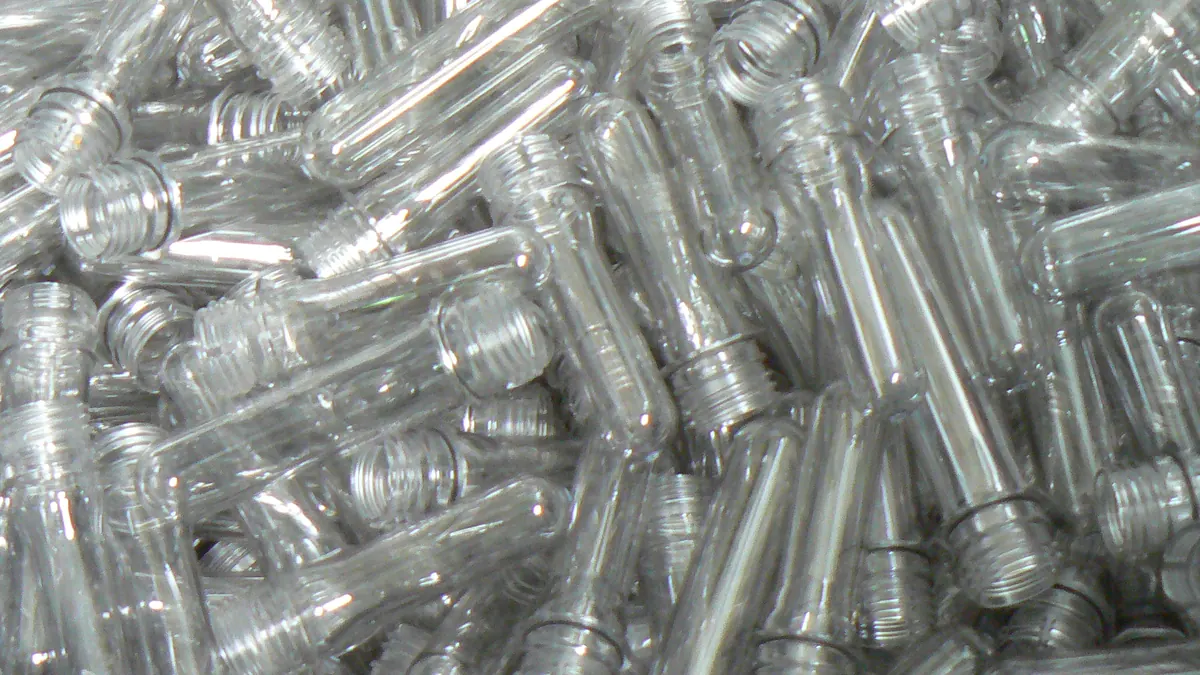
Clue: Your fizzy-drink bottle's plastic was first made in 1941, in this town in north-west England.
Related photo
Not the event: clear PET bottle preforms, the small tubes blown into fizzy-drink bottles (photo taken in 2008).Photo: “Plastic bottles before processing” by dierk schaefer (cropped) · CC BY 2.0 · via Wikimedia Commons
It began as a fabric. In wartime, chemists Rex Whinfield and James Dickson drew it into a fibre at a printworks in Accrington; ICI sold it as Terylene. As PET, it is commonly recycled back into clothing fibre.
Clue: A curtain of air bubbles, not a net, began catching floating plastic in a canal in this Dutch city.
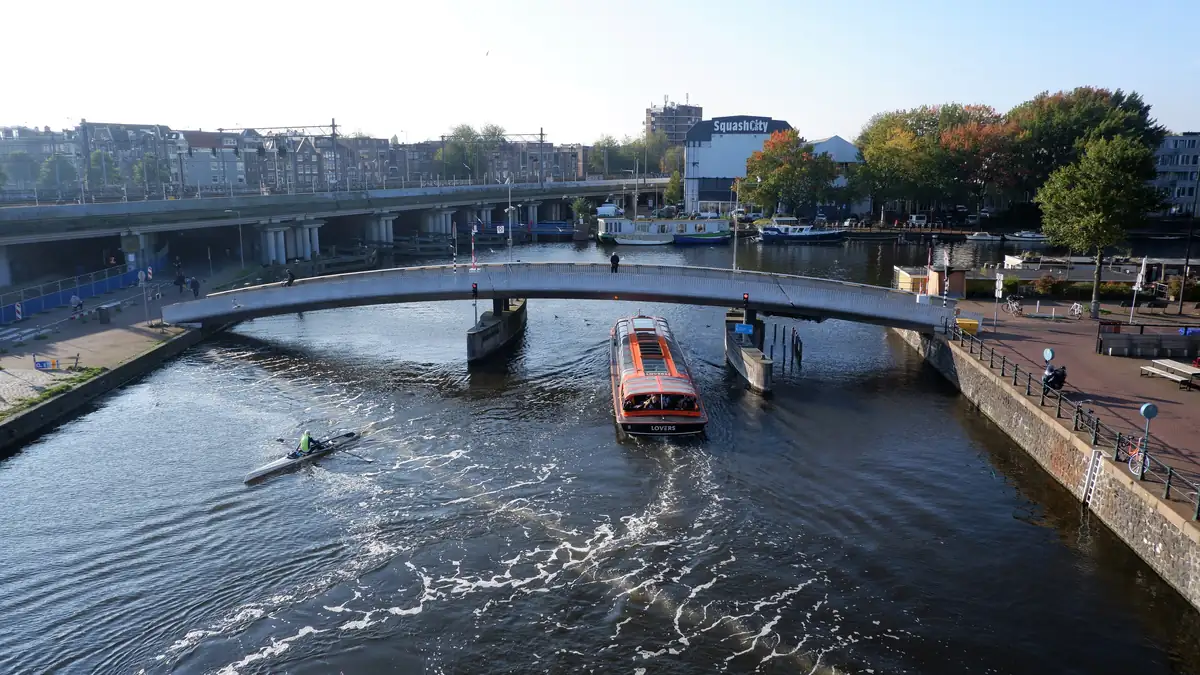
Amsterdam's Westerdok, where the Bubble Barrier was put in place in November 2019 (photo taken 7 November 2019).Photo: The Great Bubble Barrier (cropped) · CC BY-SA 4.0 · via Wikimedia Commons
Three sailors dreamed it up over a bubbly beer in a canalside bar, to catch plastic without hindering fish or ships. Amsterdam's Westerdok barrier launched in 2019. In pilot tests, the design intercepted 86% of floating material on inland water.
Evidence: Documented event · An event, reported by the source shownDutchNews, 7 November 2019 ↗Checked 3 November 2026
Hermit crabs living in plastic
Henderson Island, Pitcairn Islands
Clue: Hermit crabs on this uninhabited British island in the South Pacific lived in plastic containers.
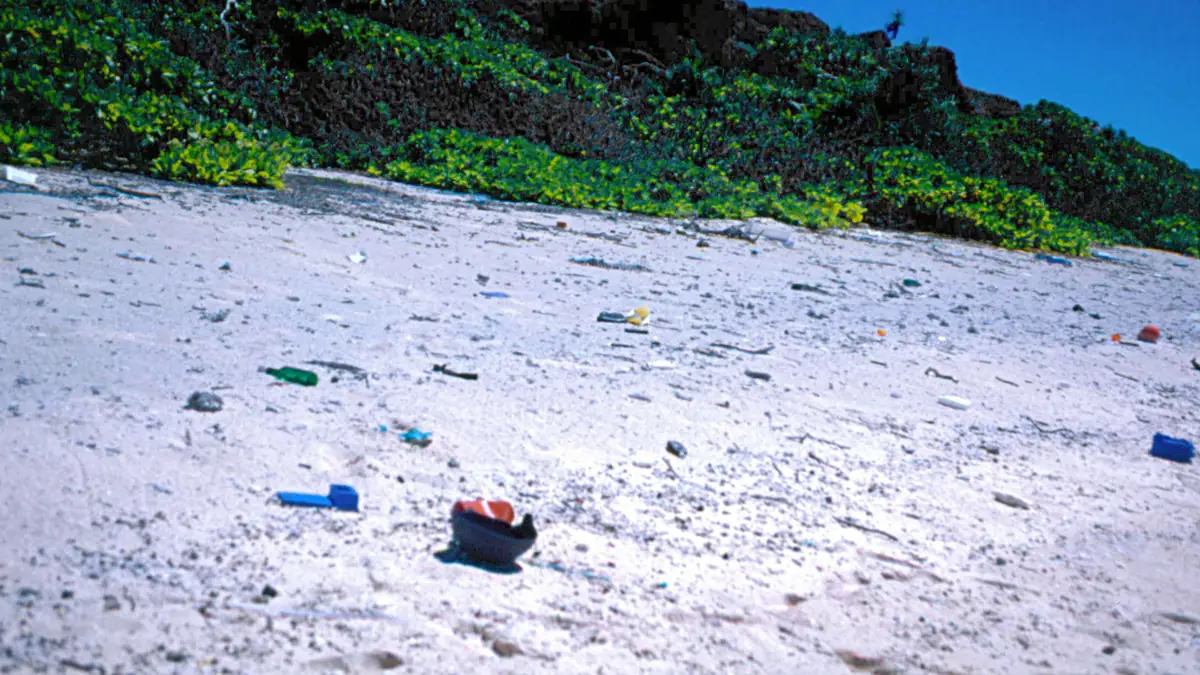
Marine debris on a Henderson Island beach, Pitcairn Islands (photo taken in April 2001, years before the 2017 study).Photo: “Hendersonmüll” by American at German Wikipedia (cropped) · CC BY-SA 3.0 · via Wikimedia Commons
Henderson Island had the densest beach litter then reported anywhere, up to 671 items per square metre (PNAS, 2017). Jennifer Lavers and Alexander Bond estimated at least 3,570 new pieces of debris washed up on one beach daily.
Clue: People in this Japanese mountain town clean and dry their rubbish, plastic too, and sort it 45 ways.
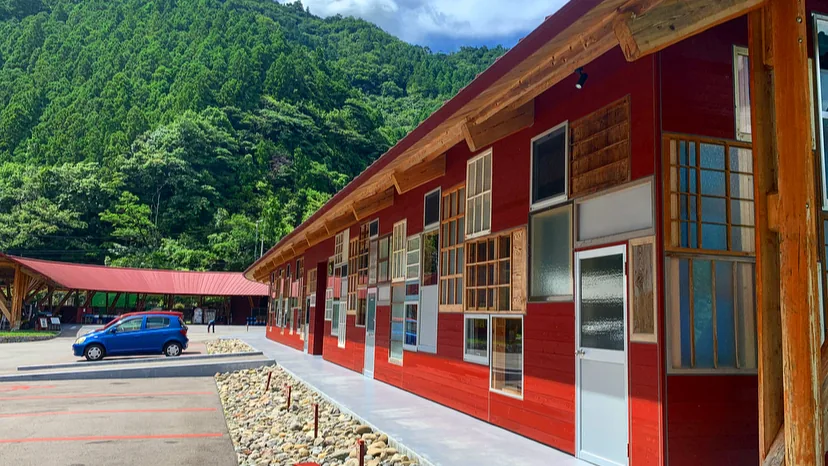
The Kamikatsu Zero Waste Center, where residents bring and sort their rubbish (photo taken 23 July 2021).Photo: Uploader on Wikimedia Commons (own work, name not given) (cropped) · CC0 1.0 · via Wikimedia Commons
No rubbish truck has ever collected from Kamikatsu's homes: people bring their rubbish to a centre shaped like a question mark, to keep them asking why they buy things. Its dot is a four-room hotel.
Clue: Plastic bath ducks, beavers and frogs lost in a Pacific storm kept washing up near this Southeast Alaska town.
Related photo
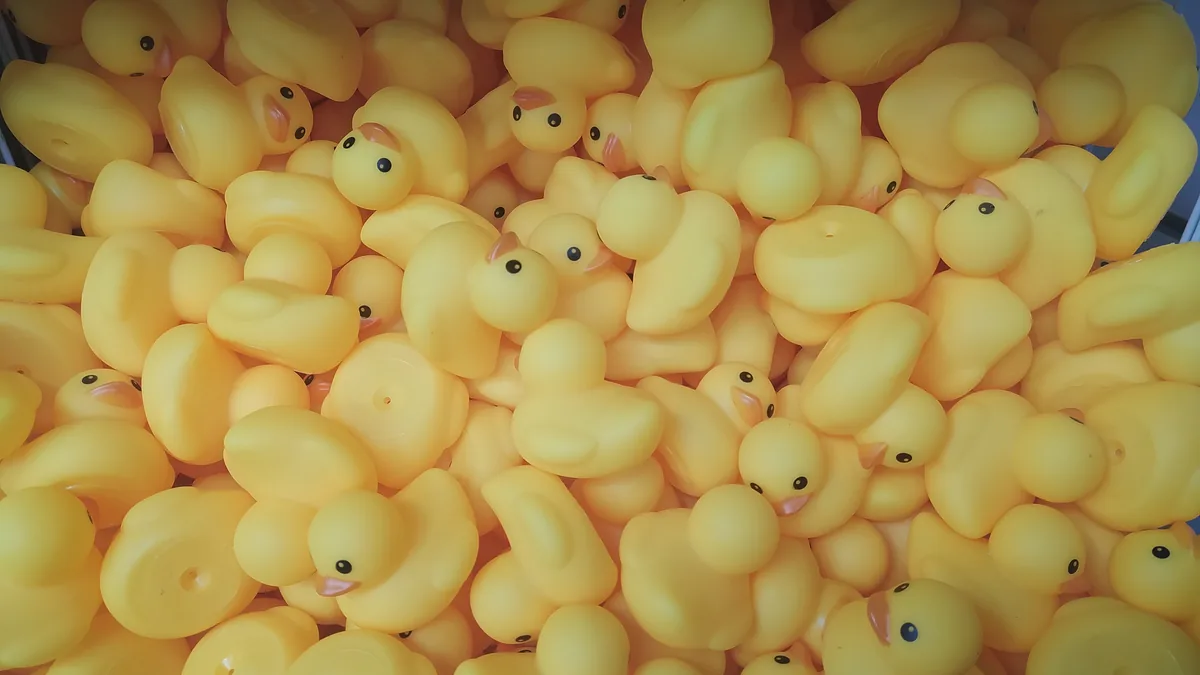
Not the event: yellow rubber ducks like the bath toys lost in the Pacific storm (photo taken 17 July 2022).Photo: Artem.G (cropped) · CC BY 4.0 · via Wikimedia Commons
Oceanographer Curtis Ebbesmeyer said the toys were riding a current loop that carries floating objects round the North Pacific about every three years. Sitka's Dean Orbison and his son found over 100, and in 2007 were still finding them.
 Related photo